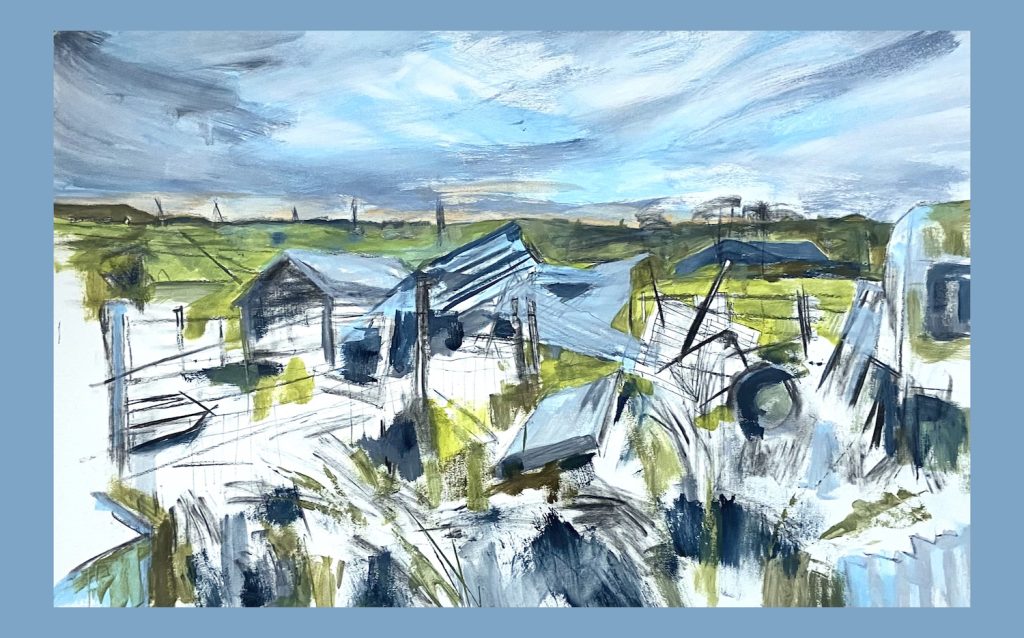
Farms and Barns Most Beguiling
Seventy per cent of Wiltshire is given over to farms and small holdings Footnote 1. I relish their meanness and implied indigence. Many are comfortingly neglected, some are small scale scrawled marks on the landscape satisfying and enduring, preserved for function or former utility.I often stop by them in the car, photograph and draw them. Later I paint them, drawn to them with
“the sort of compulsion that derives from their physicality rather than any associations”. Footnote 2
Now we have the warmth of Spring as I write. A week or so back the land and lanes were cold and flooded as I cycled to re-discover farms and barns very close to here.
‘These buildings and their grounds are visually pungent’ Footnote 2
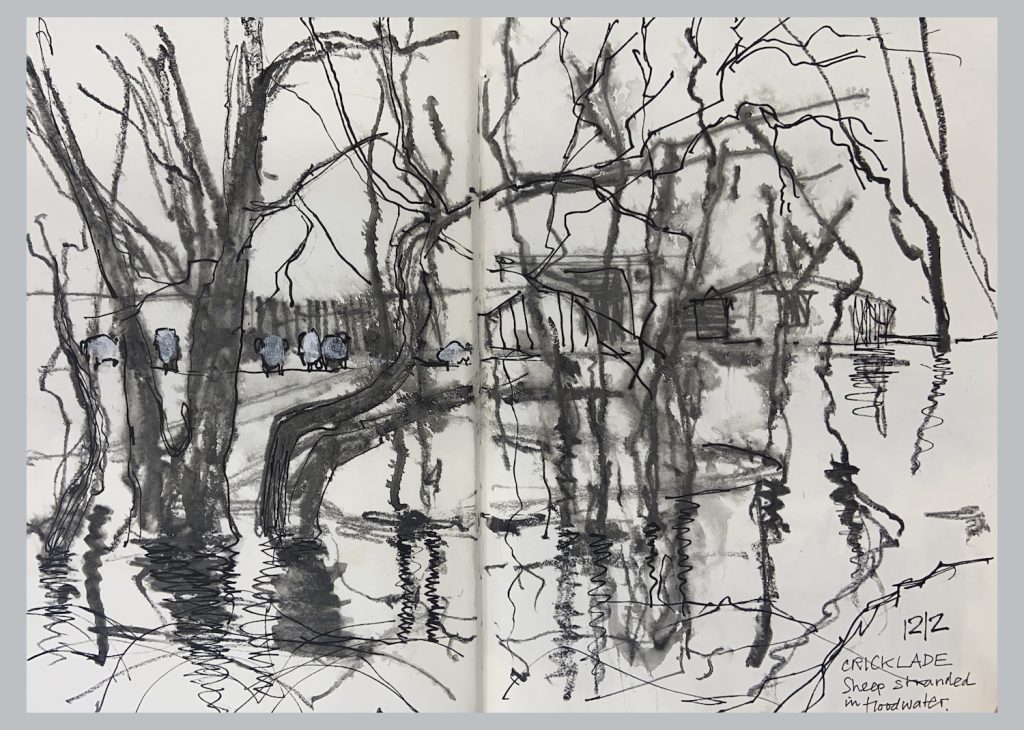 Six sheep huddle together on the only bit of land that is not waterlogged
Farms and Barns: their composition is stone, breeze block, rusting corrugated tin. Some have modern olive green steel roofs, a concession to trying to blend in. Windows without glass slowly shedding their paint. Close by is often an obligatory shipping container is pressed into service for who knows what.
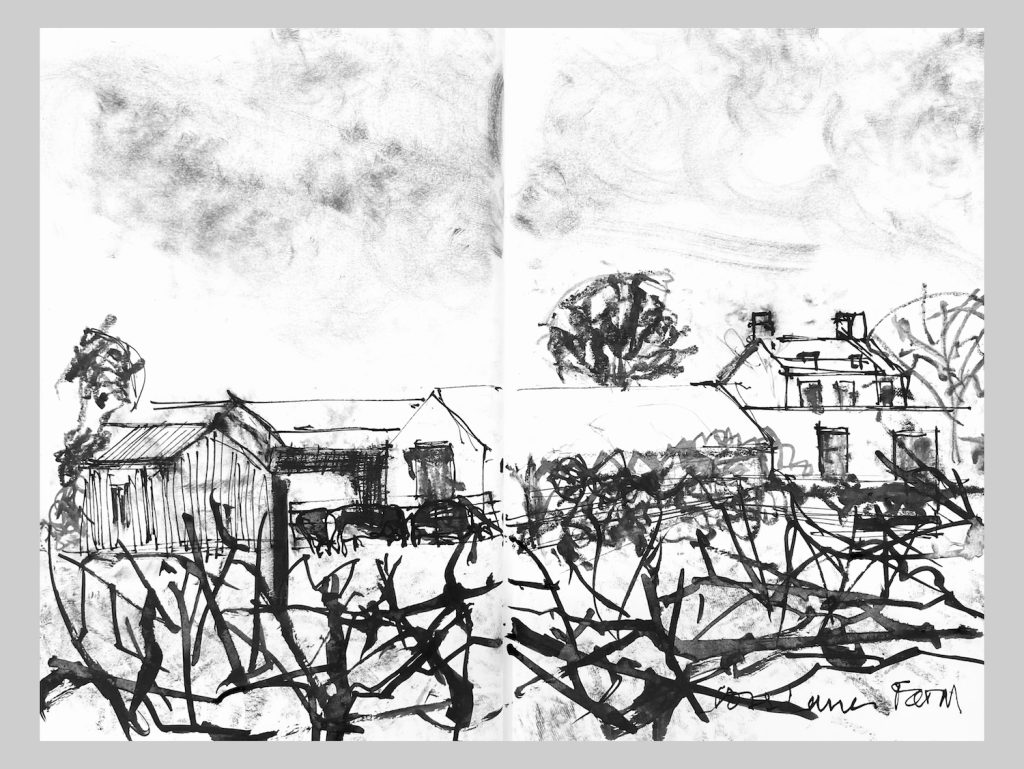 Gently rusting corrugated tin
Pleasing dereliction in these parts means two of most things, at least: cars up on bricks, corrugated sheets, plastic buckets, wire, fencing posts, tyres (lots of). Close by half a car, three-quarters of a car, a shed a hutch, more posts. All subdued by grass, ivy, creepers and old man’s beard. Oil drums (colours various) and the nearby gate is secured by blue bailer twine, acting as both hinge and latch.
Colour has a vital part to play in this agricultural tableaux. Every shade of grey a painter might mix could mix,
Greys for the stone, concrete and skies overhead.
Add Burnt Sienna for the rust,
Turquoise or electric blue in the plastic detritus that on the ground in front.
Lemon Yellow (hose pipes)
Cadmium Orange (baler twine).
Lichen: shades from dark Hookers Green to the palest blue or a watery mustard yellow.
Add Burnt Sienna for the rust
Writer Jonathan Meades gets to the heart of it 3
These buildings and their grounds are visually pungent. More satisfying than the mollycoddled rural museum heritage-experience with entry fees and overgrown with signage.
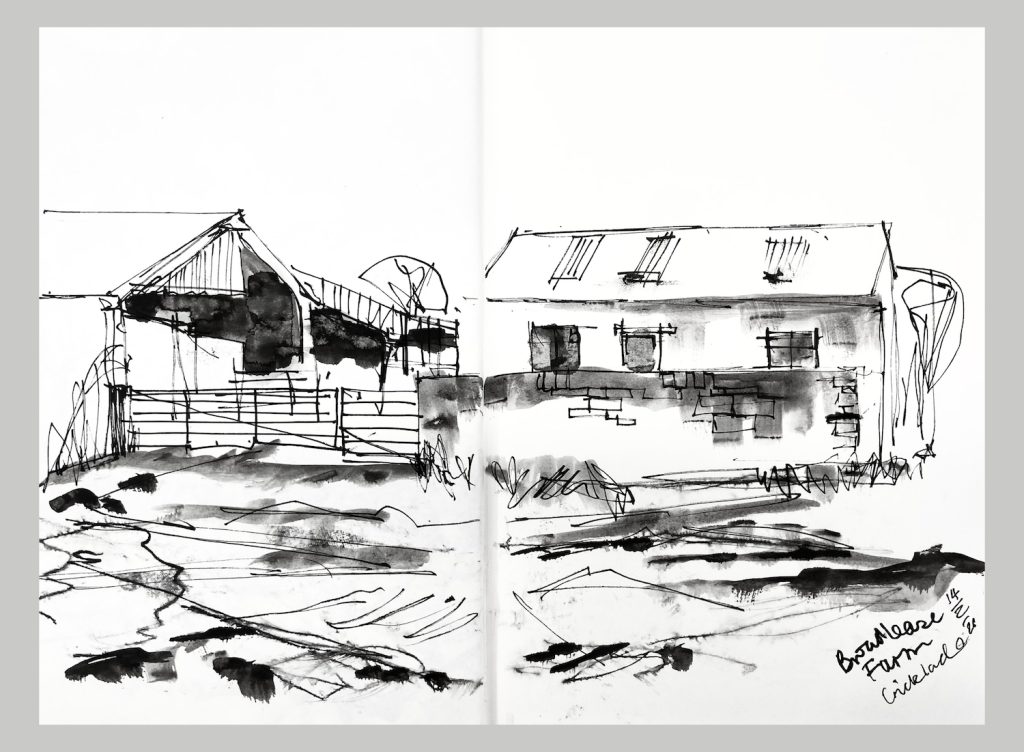
In another of his wonderful collection of observations Meades says “Everything is fantastical if you stare at it long enough, everything is interesting. There is no such thing as a boring place.” Footnote 4
John Aubrey, Footnote 5, was a Wiltshire lad, born at Easton Pierse (near Chippenham) in 1626. He wrote about the ability of dairy farmers in North Wiltshire: He was not a huge fan of these parts of Wiltshire hereabout is but little tillage (arable) or hard labour, they only milk the cows and make cheese; they feed chiefly on milke meats, which cooles their braines too much, and hurts their inventions (makes them dull).
John Aubrey, The Natural History of Wiltshire, p.11
Foot notes
1 More on farming in Wiltshire https://www.wiltshire.gov.uk/media/1005/Chapter-7-Agricultural-Land-Use-December-2005-201kb/pdf/lca-dec-05-chapter-7.pdf?m=1575293061420
2. Jonathan Meades from Pedro and Ricky Come Again Unbound Books 2021
3 Jonathan Meades from Pedro and Ricky Come Again Unbound Books 2021
4 From the Introduction to his book Museum without Walls, writings and scripts by Jonathan Meades.
5 John Aubrey, The Natural History of Wiltshire, p.11 taken from the article John Aubrey’s Box http://www.boxpeopleandplaces.co.uk/john-aubreys-box.html
Category: Art Practise, Inspiration, Jaunts Trips Shows